Available Bearing Types
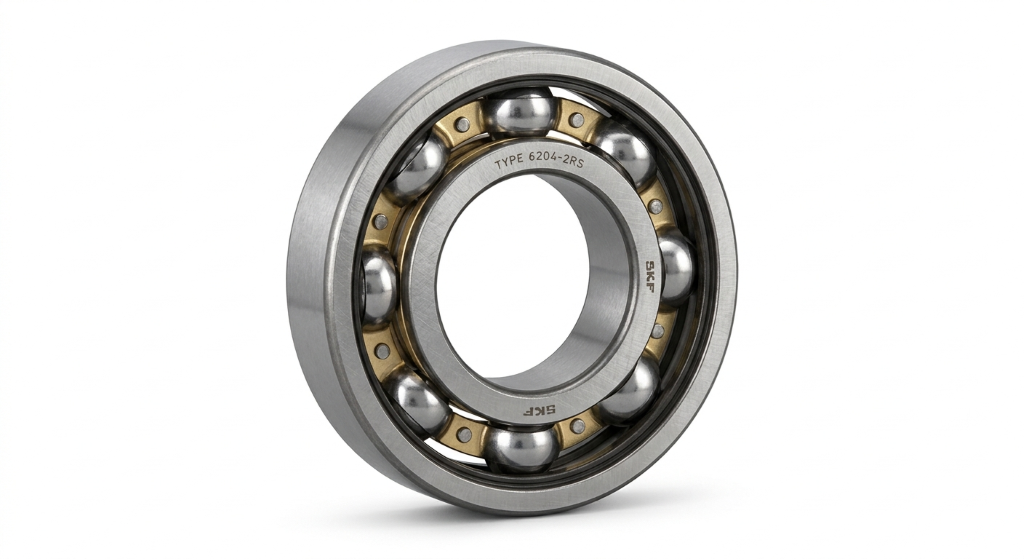
Understanding Mechanical Bearing Standards
Bearings are standardized precision components designed to reduce friction and support loads between moving parts. Most metric ball bearings follow ISO/DIN standards, while tolerances are often specified using ABEC grades (Annular Bearing Engineers' Committee). Selecting the right bearing involves balancing load capacity, speed ratings, and environmental factors.
Load Characteristics
Deep groove ball bearings are the most versatile type, capable of handling high radial loads and moderate axial (thrust) loads in both directions. However, if your application involves high-intensity axial thrust, such as in a vehicle wheel hub or a heavy-duty lead screw, specialized thrust or tapered roller bearings are required to prevent premature race wear.
Sealing & Lubrication
The environment dictates the sealing requirement. ZZ (Metal Shields) offer low friction and are ideal for clean environments where speed is a priority. 2RS (Rubber Seals) provide a contact seal that protects against dust and moisture but introduces slight frictional drag. For high-speed spindles, internal clearance (CN vs C3) must be specified to account for heat-induced expansion of the steel balls.
Static vs. Dynamic Load Ratings
When reviewing the tables in this section, engineers must distinguish between Static Load (C0) and Dynamic Load (C). Static load refers to the maximum weight a bearing can support while stationary without permanent deformation of the raceway. Dynamic load refers to the theoretical life expectancy (L10 life) under a constant load while rotating.
Design Tip: Proper Fitment
To prevent "spinning" on the shaft or in the housing, use transitional or interference fits. For aluminum housings, consider the difference in thermal expansion rates between the steel race and the housing material.